


Top Bedding Mistakes and How to Avoid Them
For many of us, our lives are busier than ever, and the design of our bedroom (and bed!) can become more of an afterthought. But common bedding mistakes can impact both comfort and style. Keep reading to learn practical tips for keeping your linen bedding soft, cozy, and beautifully arranged in a Scandinavian-inspired bedroom.
- Choosing the Wrong Textile
As makers of European bedding, we think linen is the best fabric for bedding as it’s thermoregulating, moisture-wicking, and highly sustainable. In addition, eco-friendly materials such as tencel, bamboo, and hemp can also have good qualities, depending on how they’re made. We’ve compared them all in our blog Eco Essentials: Comparing Linen With Tencel, Bamboo, and Hemp Bedding.
However, you can certainly pick the wrong textile, from both a comfort and a sustainability point of view. Plastic-based materials such as polyester are scratchy, sticky, and sweaty to sleep under, and take up to 200 years to break down in landfill. And they don’t break down into organic matter; they break down into microplastics that pollute our rivers, our oceans and even our food, eventually ending up in our bodies. These microplastics shed throughout the lifespan of synthetic sheets, not just when you discard them.

Cotton is the world’s most popular bedding fabric, so it should be better, right? Sadly, this isn’t the case. Cotton requires 234 liters of water to produce just one kilogram, creating deserts wherever it is grown. The most widely cited example of this is the Aral Sea in Central Asia, which has dried into a toxic wasteland. Cotton is vulnerable to pests; though it accounts for 2.4% of the world’s cultivated land, it uses 6% of the world’s pesticides and 16% of insecticides. Chronic exposure to pesticides has been linked to Alzheimer’s, Parkinson’s disease, cancer, and infertility. The Environmental Justice Foundation says that worldwide, 200,000 people die from pesticide poisoning every year.
Advocates of cotton praise its softness but this rarely lasts long. As a single-cell fiber, cotton thins and pills much faster than linen. And remember that softness is not the only factor in comfort: cotton is also less breathable, less moisture-wicking, and more heat-retentive than durable linen bedding.
Plus, linen is softer than you might think! Linen’s “stiffness” is partly a result of natural pectin in the flax plant from which linen is made. But pectin dissolves in water, so linen becomes softer with each wash. At The Modern Dane, we garment-wash our Scandinavian design bedding before it’s sent to you, so it’s already soft and comfortable to sleep on.
- Adding Too Many Accessories
In Scandinavia, less is more. Instead of jazzing up our beds with endless throw pillows and quilts, we focus on selecting the most beautiful bedding possible. This might be an elegant printed set (such as our new Skov set!) or a plain color made from the finest European linen, with its natural texture shining through.

All these accessories can affect your sleep by getting in the way, and they can also make it much more difficult to make your bed in the morning. Depending on what they’re made from, accessories can also cancel out the natural qualities of your bedding. It’s not much use buying high-end, breathable linen bedding if you’re going to put a polyester quilt on top of it.
- Not Considering a Duvet Cover
We understand: our long-lasting linen sheets are a dream to sleep under, and we can get very attached to our comforters over time. But have you considered a duvet and duvet cover instead? It’s usually more hygienic, since duvet covers are washed more often than comforters. It’s also easier to make your bed, since you only have one item to arrange and duvets don’t need to be tucked in to look good.

One of the other primary reasons is aesthetic. Duvet covers come in a wide variety of solid colors and prints, serving as a beautiful way to draw the eye to the focal point of the room. Our Scandinavian-style duvet covers are printed with Danish flora and fauna, including birds (Fugle), myrica gale (Porse), and flax flowers (Hørblomst). If you’re not ready to give up your comforter, try putting a duvet cover over it! Check our size chart (next to each listing) to make sure you’re buying the right size, as comforters are typically larger than duvets.
- Forgetting About Fill
What goes into your duvet and pillow covers is just as important as the covers themselves, as they’ll be working together. Forget cheap, clumpy, and unsustainable polyester bedding: go for down, feathers, or a down-feather combination for loft and breathability. Vegetarian or vegan? You still have options. PrimaLoft Bio is a synthetic fill that, once discarded, degrades into chemicals found in nature. If you’d rather go all-natural, try kapok “plant down.” It’s harvested from the seeds of the tropical Ceiba tree, and is lightweight yet insulating.
- Not Fluffing Your Bedding
The one downside to natural fill is that it tends to “collapse” without maintenance, so you’ll need to fluff it up often. Give both your pillows and duvet a good shake when you make your bed in the morning, and they’ll look good and feel great for years to come. Designer tip: give your pillows a light “karate chop” in the center, which makes them look extra plump. But don’t overdo it, otherwise they’ll look more “frightened bunny” than “cozy”!

- Using Fabric Softener
As mentioned, sustainable textiles like linen are softer than you’d expect, so you don’t need to waste money on fabric softener. In fact, did you know that fabric softener is both bad for the environment and for your European linen sheets? Many formulas have a petroleum base that doesn’t break down, so it threatens marine life. Additionally, it blocks the natural pores in the linen fiber, compromising its breathability. If you want to soften sheets naturally, use white vinegar in the softener drawer. It removes odors too.
- Spending Too Much Time on Ironing
Life is too short to waste time on ironing. Unlike cotton, which tends to look messy if unironed, our European duvet covers are meant to have a beautifully lived-in, rumpled look. It brings out the natural texture of the fabric and makes your bed look inviting rather than cold and businesslike.
Are you pro- or anti- accessories? Will you be putting these tips into practice? Let us know on Instagram, Pinterest, Facebook or Twitter!
Read more
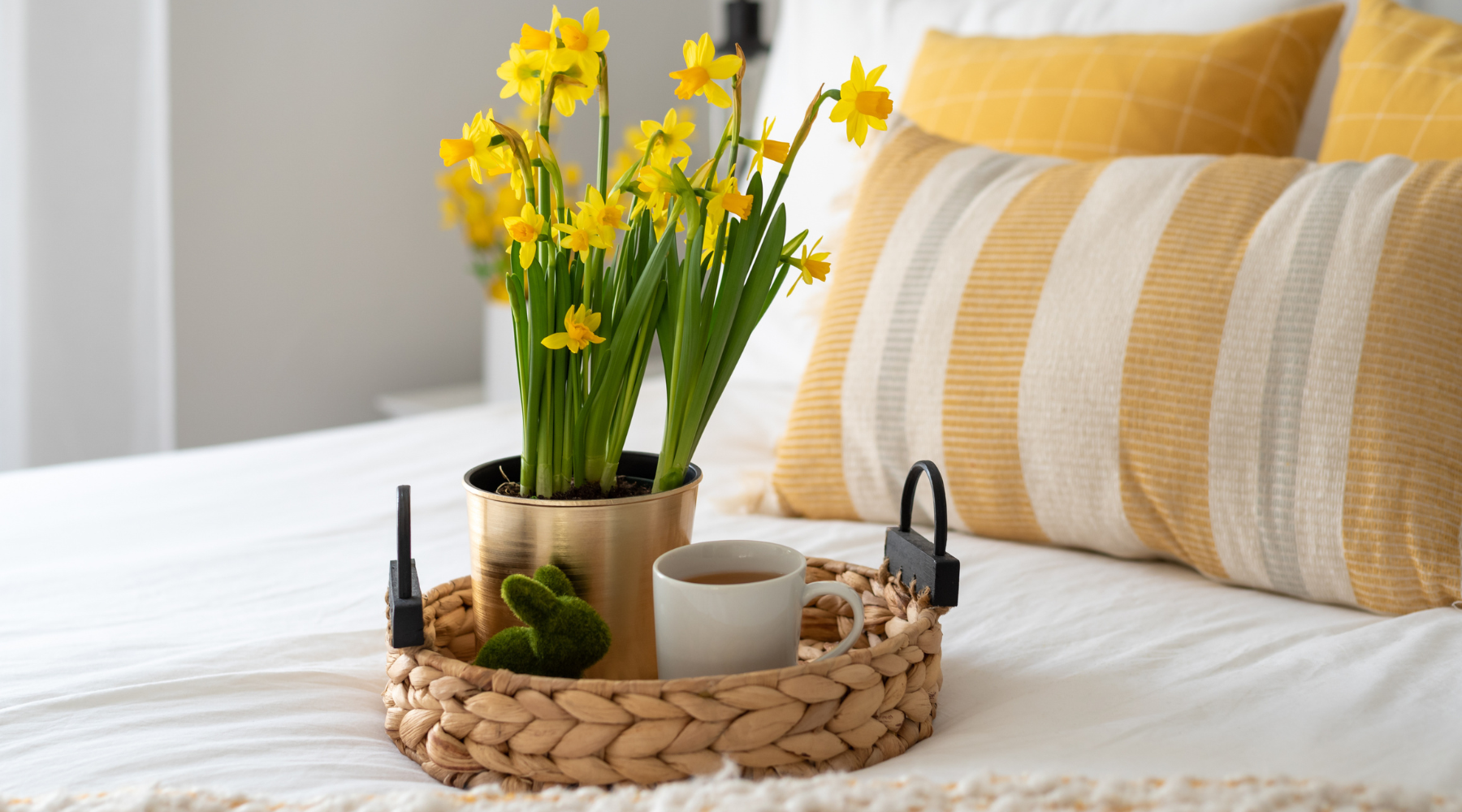
Scandinavian Bedroom Refresh: Spring Edition
Give your bedroom a spring makeover! See what colors, textures, and shapes are trending and ways to incorporate these in your own space.
Read more
Linen is a wrinkled, scratchy fabric only for summer. True? False! We set the record straight, busting 7 common myths about linen bedding.
Read more
%20can%20become%20more%20of%20an%20afterthought.%20But%20common%20bedding%20mistakes%20can%20impact%20both%20comfort%20and%20style.%20Keep%20read...)
Leave a comment
This site is protected by hCaptcha and the hCaptcha Privacy Policy and Terms of Service apply.