

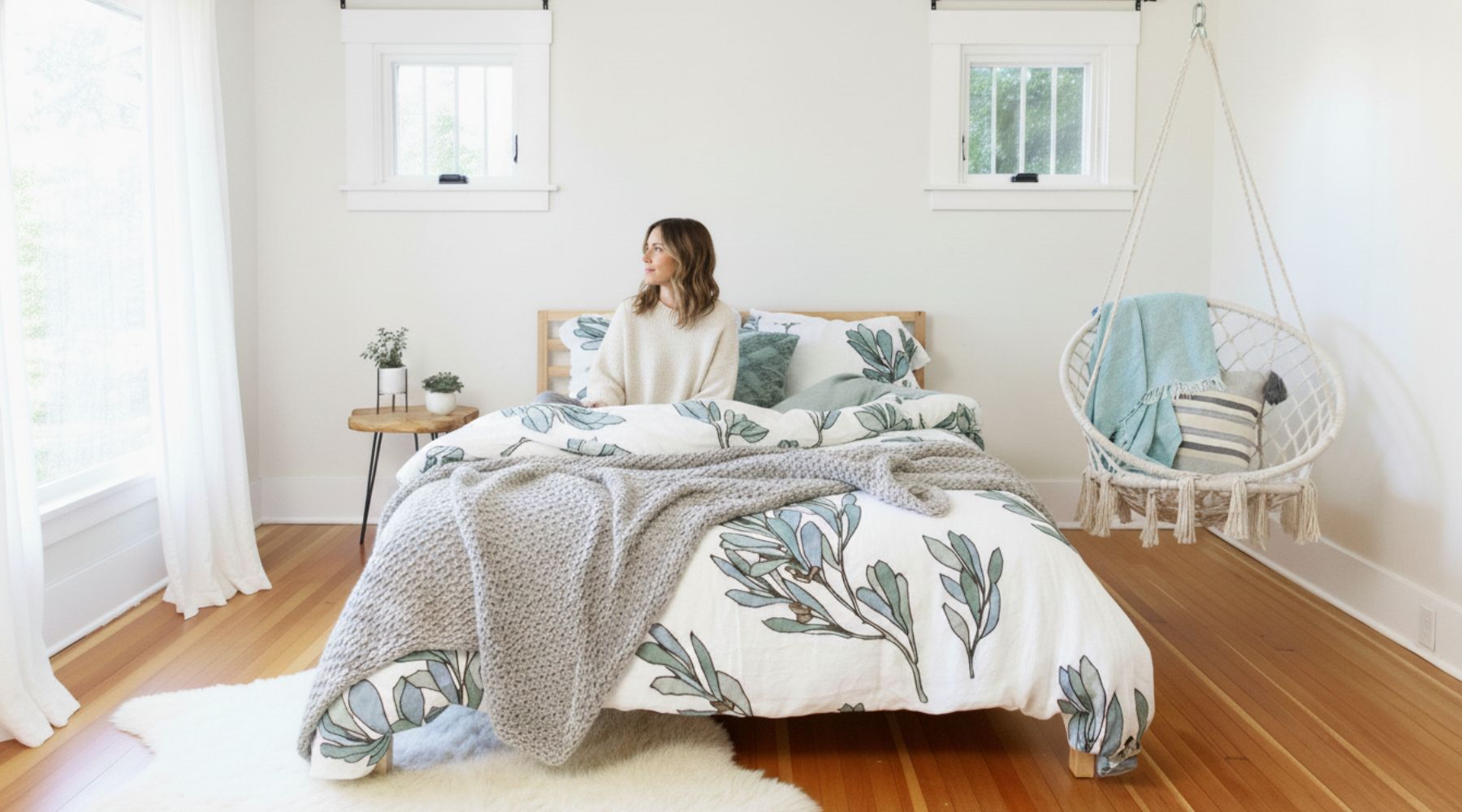
Mixing Linen with Unexpected Fabrics: A Guide to Texture Play in Your Bedroom
Explore how combining linen with velvet, silk, and other rich fabrics—through throws, cushions, rugs, and curtains—creates a warm and cohesive, hygge-inspired bedroom.
How to Hygge
Hygge is the Danish concept of comfort, coziness, and conviviality. It’s characterized by (among other things) warm, woolen socks; glowing candles; freshly baked cookies; and a hot cup of coffee on a winter’s day. Engaging multiple senses is key to creating a feeling of hygge; in the bedroom, combining different textiles can help achieve this, as it inspires coziness through varied sights, sounds, and textures.
Linen Bedding: The Foundation
European linen, a tactile and attractive textile, forms the foundation of a hygge bedroom. Our Scandinavian-style bedding is made from soft, breathable European linen, which lasts for years when properly cared for.
With its loose-woven texture and artfully-rumpled appearance, linen has lately been stereotyped as a rustic material for bohemian spaces—but this couldn’t be further from the truth.
Linen, the world’s oldest textile, has an illustrious history. It was used as currency in the moneyless economy of Ancient Egypt; the New Testament Book of Revelation says that angels were clothed in white linen. Alexander the Great wore a laminated linen breastplate as he conquered Europe and Asia; many of our greatest works of art were painted on linen canvases.

In addition, the care that goes into the linen production process results in a fabric of unparalleled quality. Linen is made from European Flax, which grows naturally in the fields of France, Belgium, and the Netherlands without the need for artificial irrigation or fertilizers. Once harvested, it’s laid in the field for several weeks until the softer outer layers of the plant dissolve away to reveal the linen fiber. The fibers are then mechanically separated and—in the case of our European linen bedding—sent to a textile mill in Guimaraes, Portugal to be woven by artisans. The result is a high-end, soft, durable, and breathable bedding that’s free from harmful chemicals. Browse the full collection of European linen bedding in our shop: you’ll find solid-color options, plus soft linen bedding sets printed with beautiful Danish flora and fauna-inspired designs.
Throws and Cushions
Many people—including most Scandinavians—keep their bed simple, with no throws or cushions. But hygge is subjective—and for some, the more the merrier!
Your linen duvet covers are thermoregulating, meaning they’ll keep you cool when it’s warm and warm when it’s cool. However, a throw can also be useful during transitional seasons, when the temperature can quickly change.
Wool—also a thermoregulating textile—is a wonderfully cozy choice for a hygge throw. Vegans might consider synthetic velvet—just make sure it’s made from recycled polyester.

Throw cushions are a great opportunity to mix up materials, colors, patterns, and textures. In some Nordic countries, it’s common to find an embroidered throw or cushion on the bed, which will add more texture (and more hygge) than a print. Mix things up: you’ll find cushion covers in wool, linen, silk, velvet, and more. If buying the fill cushion separately, go for feather cushions, which feel more luxurious than synthetic ones.
Curtains
Curtains are incredibly important to the overall feel of a bedroom, both functionally and aesthetically. Whatever fabric you choose, they should be lined with blackout lining to ensure you get the best night’s sleep possible. You can take your curtains to a drapery workroom, who will do this for you. If you want a true blackout effect, consider a valance or cornice at the top of the window, which will block any light creeping in.
It’s important to get the length of your curtains right. Ideally, they should start not at the top of the window, but at the ceiling, and end either just above the floor or pool on it. Curtains tend to look better if double-hemmed at the bottom; you can buy sew-in weights to make them hang properly.
Though usually more expensive than other fabrics in the room, curtains are worth the investment—using poor quality, flimsy textiles will make the whole room look underdressed. Use a thick, bast fabric such as linen or hemp, or even silk-based velvet.

Rugs
Rug placement and patterning is easy to get wrong—and surprisingly difficult to get right. But don’t let that put you off! The right rug makes a huge difference to the atmosphere (and hygge-ness) of your space; designers often refer to them as “the fifth wall” of the room.
If you’re on a limited budget, a jute rug is a classic and elegant choice—there are bleached and dyed options available too. Wool, silk, or even animal-hide (e.g. sheepskin or cowhide) rugs are more expensive but look spectacular. Deep-pile rugs look and feel very hygge to sink your toes into in the morning but can be difficult to clean—it depends on your personal tolerance for cleaning. Avoid polyester rugs if you can, as they tend to shed microplastics.
As for rug placement and size, the most common mistake is to buy one that is too small. You have three main options: to buy a huge rug on which to place the bed and both nightstands; a slightly smaller one (for under the bed but not the nightstands), or two runners that extend on either side of the bed.
Tying it Together
Mixing fabrics, while fun, can be tricky. However, there are simple ways to keep everything unified, even with many different textures in play.
Before you begin, decide on the color palette for your space. We’ve previously covered color palettes in detail, but in short: choose a foundational color (perhaps the color of your European linen duvet covers?), plus two to four additional colors that complement your main color. By purchasing items within your palette, your bedroom will look harmonious no matter how many different textiles you use.

At the heart of your hygge-inspired textile mix should be a high-quality base—and that’s where our linen bedding comes in. Crafted from sustainably sourced European flax, our Scandinavian bedding offers the perfect balance of softness, breathability, and durability. It serves as an elegant neutral canvas for layering in those richer textures mentioned above.
What are your favorite textiles? What do you do to create a feeling of hygge in the bedroom? Let us know on Instagram, Pinterest, Facebook or Twitter!
Read more

Scandi Interiors, Reimagined: Deep Woods & Glowing Metals
See how to incorporate darker woods and metal accents in your Scandi-style spaces, bringing depth and elegance to your home.
Read more
Holiday Hospitality, the Hygge Way: Creating a Warm Welcome for Guests
Discover how to welcome guests the hygge way this holiday season—with soft linen bedding, warm white lights, natural scents, and comforting Danish treats.
Read more

2 comments
Hi Jane — thanks for the question! Our bedding is made from 100% certified organic flax grown in Belgium and France, then woven and sewn in Portugal by skilled artisans. This region has centuries of expertise in linen production, and we partner only with mills and workshops that meet the highest standards for sustainability and quality.
The Modern Dane
What is the country of origin? Where is your bedding made?
Jane Perry
Leave a comment
This site is protected by hCaptcha and the hCaptcha Privacy Policy and Terms of Service apply.