

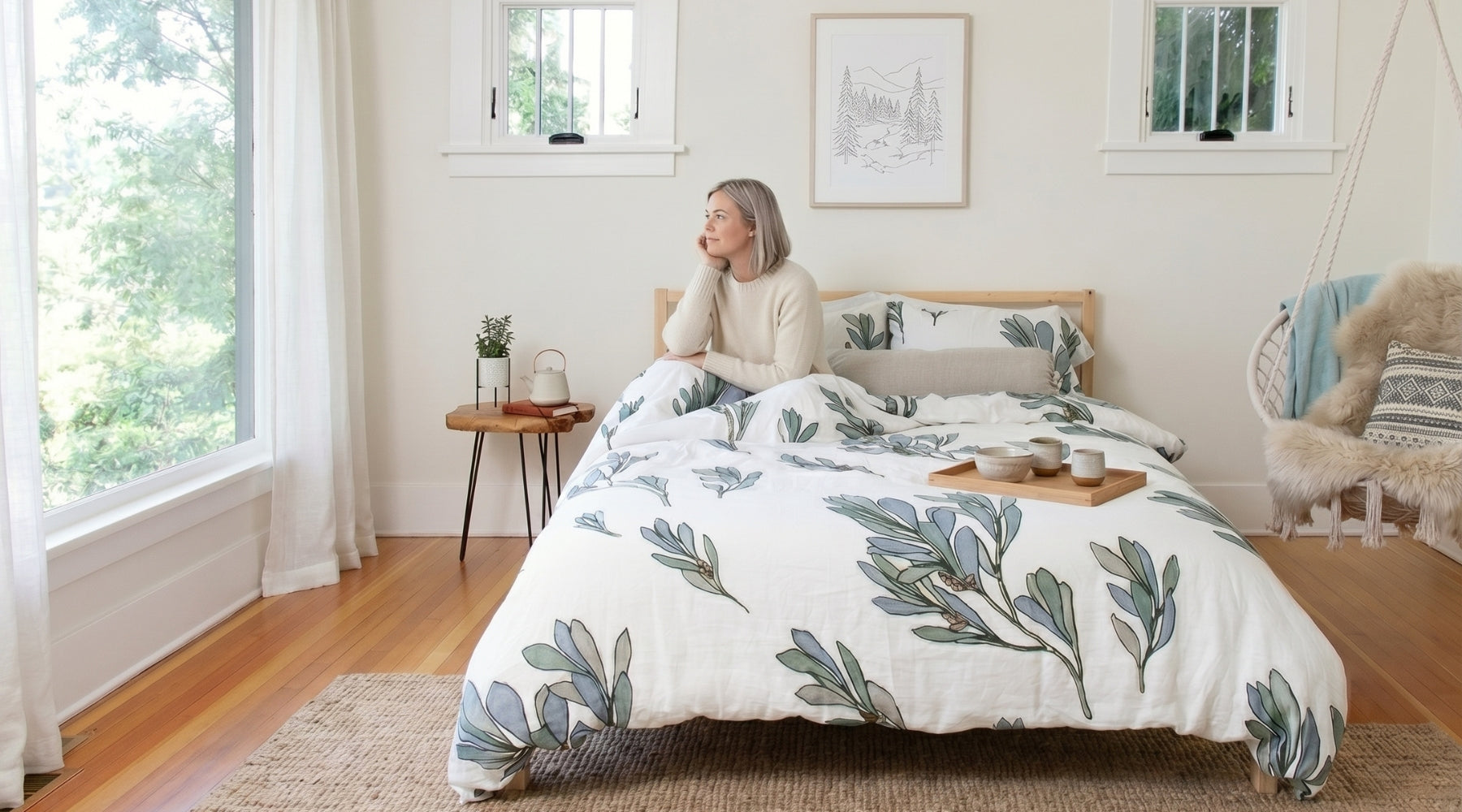
How to Choose the Best Bedding for Menopause
Looking for relief from night sweats? Explore simple, Scandinavian-inspired tips for cooler, more restful sleep during menopause.
A (Very) Brief Introduction to Menopause
The medical definition of menopause is a woman’s final period, after which she becomes post-menopausal. The average age of menopause is 51, but it can occur earlier or later. In cases of premature ovarian insufficiency (POI), or if the ovaries are surgically removed, it can be much, much earlier.
What most people refer to as “menopause”, however, is technically the perimenopause: the period where hormones (primarily estrogen and testosterone) begin to decline, and fluctuations become more intense. According to the NIH, symptoms typically last between two and eight years, starting around the beginning of perimenopause and continuing for a while after menopause.
Experiences of menopause transition vary wildly; some women may have virtually no symptoms, while others have their lives turned upside down. Symptoms of menopause can include hot flashes and sweating, rapid mood changes, depression, sleep difficulties, and decreased libido.
The Most Effective Menopause Treatment: HRT
Bedding and lifestyle changes can provide significant relief in perimenopause and menopause, but the most effective treatment, for those who can take it is still hormone replacement therapy, or HRT (sometimes called MHT: menopausal hormone therapy). Through patches, gels, pills, and sprays, HRT “tops up” the declining hormones, leading to reduced symptoms. For more on HRT, consult the relevant pages from the US Office on Women’s Health, the NHS (UK), or Helsenorge (Norway).

Selecting the Best Bedding for Menopause
In the throes of the menopause transition, good sleep can feel like a distant memory. Fluctuating hormones disrupt the body’s ability to regulate temperature, resulting in hot flashes and night sweats. The best bedding for menopause, therefore, is thermoregulating (cool when it’s warm and warm when it’s cool), absorbent, and moisture-wicking. It’s also soft, since abnormal skin sensations such as burning, crawling, or prickling can also be symptoms of menopause.
We could lay out the pros and cons of linen, cotton, viscose, polycotton… but it would be a waste of time. The properties of European linen make it by far the best bedding for menopause, and it’s not even close. A 2022 study by the University of Lorraine compared cotton, viscose, linen, and polyester; flax linen came first for breathability, permeability to water vapor (i.e. moisture-wicking), comfort, and moisture management.
Even compared with newer “eco-fabrics” such as hemp, bamboo, and tencel, linen still holds its own. Check out our blog comparing these three fabrics with European linen to get the full picture.
These menopause-friendly properties are thanks to linen’s natural attributes. The Modern Dane’s European bedding is made entirely from flax grown in the fields of Belgium, France, and the Netherlands. Along the length of flax stems are tiny pores, which evenly distribute water and nutrients throughout the plant. Even after harvesting and mechanical processing, these pores remain, helping with breathability and moisture-wicking.

Improving Your Sleep Environment During Menopause
Mood changes can be among the most debilitating menopause symptoms; it’s therefore more important than ever that your bedroom is a sanctuary of peace and calm. For us Scandinavians, that means one thing: hygge.
Before adding any more items to your bedroom, you’ll need to declutter. Recycle or donate old clothes, ornaments, and anything else taking up unnecessary space in your bedroom (and your life). Avoid having too many items out in the open, as they can create visual clutter; the only things you should be able to see are furnishings and ornaments you truly love.
If you’re planning a bedroom refresh, consider decorating using nature-inspired colors. A 2011 Turkish study found that cool and neutral colors, like blue, green, grey, and white, had calming effects. Plus, they complement our Scandi-style bedding perfectly. Use warm-toned, dimmable lightbulbs, and add unscented (or naturally scented) candles for extra coziness.
Use tactile textures, especially in winter: wool throws, curtains in linen or hemp, and sheepskin rugs into which you can sink your feet on a cold day. Don’t forget your soft linen duvet cover, which will keep you feeling comfortable throughout the seasons. If your duvet is too warm, you can use one of our long-lasting linen top sheets instead.
Scandinavian Lifestyle Advice for Menopause
The first thing to know about menopause lifestyle advice is that everyone experiences menopause differently. Midlife is already a difficult time; there is no point in making it more miserable by cutting coffee and alcohol (as recommended by the Swedish government) if you tolerate them just fine! That said, they have the potential to exacerbate symptoms, so experiment with reducing or eliminating them for a few weeks and see if that helps. They also recommend giving up smoking; as well as all the other negative effects, it can reduce the effectiveness of HRT.

Physical exercise is one of the best things you can do for your health at any age, but particularly in menopause. Getting outside will not only benefit your physical health but your mental health as well. Start with walks in the park and gradually build up to more challenging hikes, if you feel able.
Psychologically, it can help to see menopause as a time of change, not loss. The word for menopause in Danish and Norwegian is “overgangsalderen”, or “the transition age.” Once the rollercoaster has ceased and hormones are stable, many women find it to be a time of freedom, both from their cycles and from societal expectations. It is a time of slowing down, but in a good way: taking more time to savor the small things that make life pleasurable, such as a hot drink, a good book, or a peaceful walk.
In Scandinavian culture, the emphasis is on society rather than the individual; it’s expected that you lean on others in times of need. “It's good to tell your loved ones how you feel,” says 1177, Sweden’s national healthcare information service. “You may need relief so that life is not so hard. Some examples are help with taking care of children or grandchildren or help with new tasks at work. It can also be getting support with emotional things such as concerns in your relationships with family, friends, or colleagues.”
What are your fail-safe techniques for dealing with menopause symptoms? Did you change your bedding during the menopause transition? Let us know on Instagram, Pinterest, Facebook or Twitter!
Read more
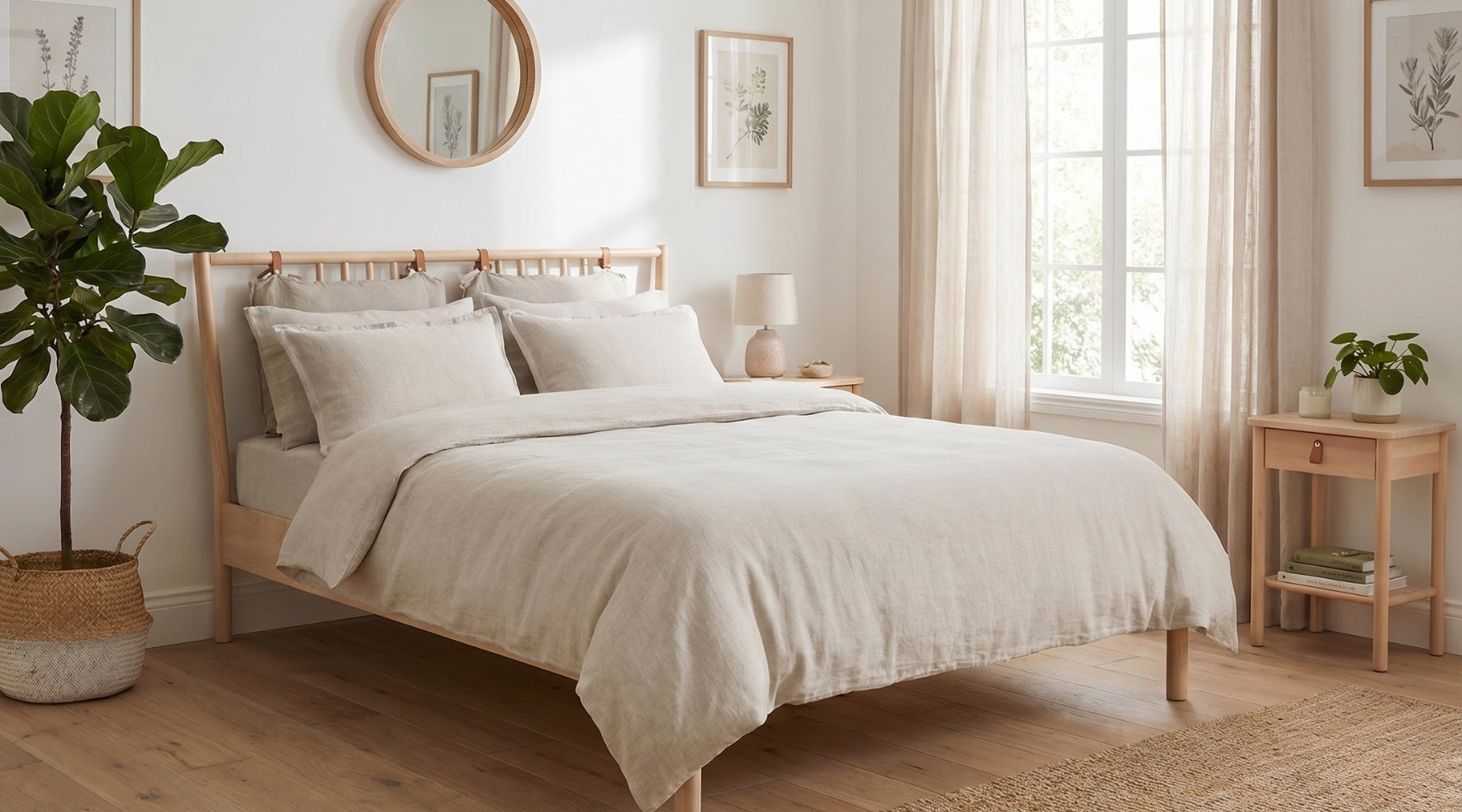
Why Danish Design Never Goes Out of Style
Discover why Danish design never goes out of style and how its timeless principles of simplicity, quality, and functionality keep it forever in fashion.
Read more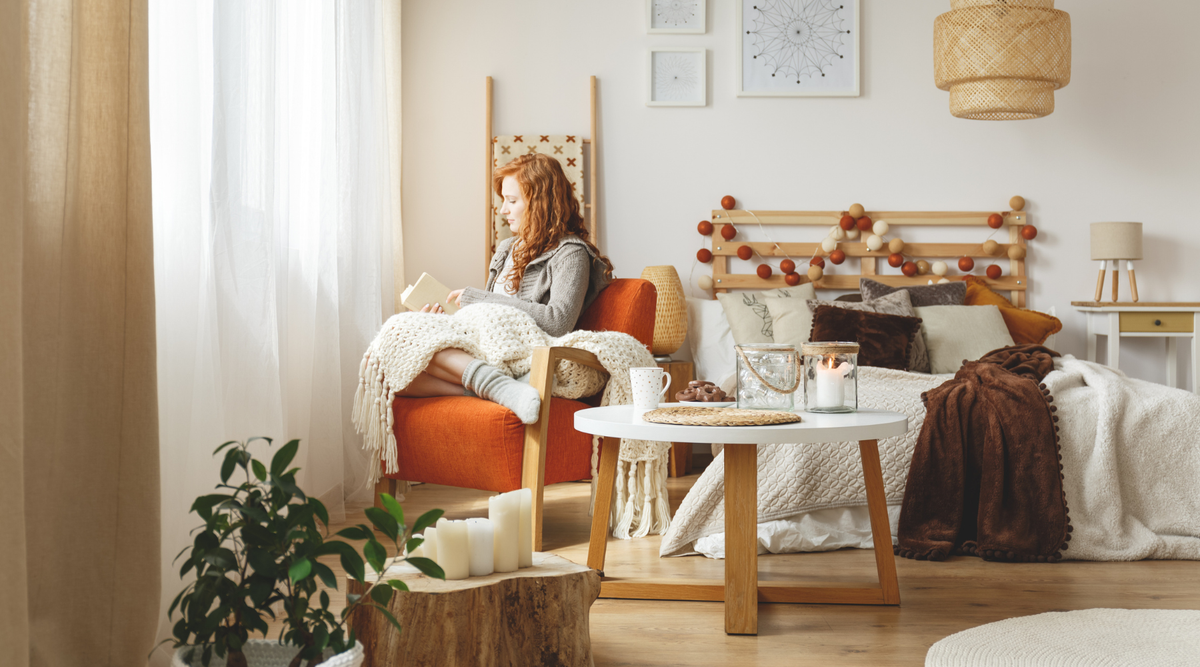
Autumn Bedroom Ideas: Colors and Textures Inspired by Nature
Ready for a fall refresh? Discover our favorite ways to give your Scandi-style bedroom a cozy autumnal feel.
Read more
%20Brief%20Introduction%20to%20Menopause%0AThe%20medical%20definition%20of%20...)
Leave a comment
This site is protected by hCaptcha and the hCaptcha Privacy Policy and Terms of Service apply.