

Article: How to Choose Scandinavian Bedding for Your Bedroom
How to Choose Scandinavian Bedding for Your Bedroom
Scandinavian bedding is often reduced to white sheets and a carefully rumpled duvet. That can be lovely, but it is only one version of the look. In Scandinavian homes, bedding is chosen much like everything else: it should feel good, work well, and bring warmth to the room without demanding constant attention.
That leaves room for color, pattern, and personality. The goal is to choose bedding that belongs in your bedroom and makes the space more comfortable to live in.
What Makes Bedding Scandinavian
Scandinavian design is grounded in function, natural materials, thoughtful construction, and visual calm. Applied to bedding, those principles favor breathable fabrics, practical details, and colors or patterns that are easy to live with. A Scandinavian bed may be simple, but it should never feel austere. Long northern winters have little use for a bedroom that looks elegant yet feels chilly.
The most convincing rooms feel collected rather than themed. You do not need pale wood furniture and white walls before Scandinavian bedding is allowed through the door. A solid duvet cover can settle a colorful room, while a nature-based print can add life to a restrained one.
Work With the Room You Already Have
Before choosing the bedding, take stock of the room. Notice the undertones in the wall color, the wood or metal of the bed frame, the floor, curtains, and any artwork you want to keep. You are looking for one or two colors already present that the bedding can repeat or complement. This creates cohesion without requiring every shade to match exactly.
In a light room with oak, cream, or warm white, natural linen and soft gray add texture without disrupting the palette. Cooler rooms can carry blue, gray-blue, mint, or charcoal well. If the walls or rug already provide plenty of color, choose a solid duvet cover. If the room feels flat, let the bed add personality through a botanical or woodland print.
Choose the Material Before the Color
Bedding occupies a large part of the room, and you spend hours against it every night. Material should therefore come before color. Linen works especially well because its natural variation gives even a solid color depth. It looks relaxed without layers of decorative pillows, which do have a habit of multiplying.
Our European linen bedding is made from 165 GSM linen using flax grown in France, Belgium, and the Netherlands. The fabric is woven and sewn in Portugal and garment-washed after sewing, giving it a soft, substantial feel from the start. Linen is also breathable and absorbs moisture, which makes it comfortable across seasons rather than useful only when the bedroom happens to match the weather outside.
If you are comparing weight, weave, origin, or certification, our complete guide to buying linen bedding explains what those details mean. The fabric should feel balanced: breathable but not flimsy, textured but not loosely woven, and soft enough to enjoy now while continuing to relax with use.
Build the Palette Around One Anchor
An easy way to choose bedding colors is to begin with one anchor. That might be the duvet cover, a rug, a favorite print, or the view outside the window. Pull one color from that anchor for the sheets or pillowcases, then allow nearby shades to do the rest. Scandinavian rooms often use tonal combinations rather than exact matches, so a pale blue can sit comfortably beside gray-blue, and natural linen can work with cream, warm gray, or wood.
White reflects light and creates a clean foundation, but it is not a requirement. An entirely white room without texture can feel less like Copenhagen and more like a freshly painted rental. Natural linen, muted green, dusty blue, charcoal, and soft gray all fit a Scandinavian palette. Darker bedding can anchor an otherwise bright room.
Decide Whether the Duvet Should Lead
The duvet cover is usually the largest uninterrupted surface in the room, so decide whether it should act as the focal point or the background. A solid linen duvet cover makes sense when the room already contains patterned wallpaper, expressive artwork, or a colorful rug. The texture of linen keeps the bed from looking flat, even in a quiet neutral.
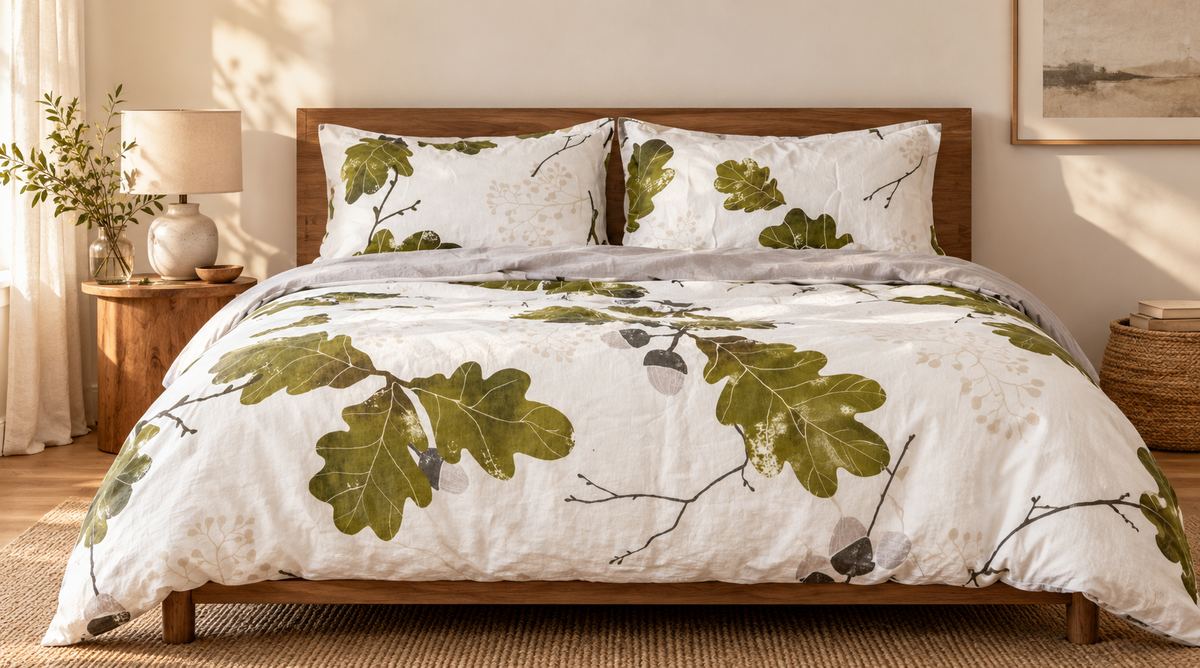
A Scandinavian print can do more of the decorating in a simpler room. Prints drawn from Nordic plants, forests, birds, and changing light bring nature into the space without requiring a collection of small accessories. Give the pattern some breathing room by repeating one of its colors elsewhere and keeping competing prints limited. For a more detailed approach, see our guide to mixing patterns and prints in the bedroom.
You can also mix a printed duvet cover with solid sheets and pillowcases rather than buying everything as a matching set. This makes the room feel more personal and gives you flexibility when laundering or changing the look. The relationship between the colors matters more than perfect coordination.

Keep the Layers Useful
Scandinavian beds tend to look relaxed because the layers serve a purpose. Start with the sheets you actually prefer to sleep with, add the duvet, and use a throw only if you reach for it on cooler nights. A few pillows are comfortable; a small upholstered mountain that must be relocated every evening is less convincing.
Let the linen fall naturally rather than pressing every crease out of it or tucking the duvet into a rigid rectangle. A simple fold at the top reveals the sheets or the reverse of a printed cover and makes the bed feel inviting. If you want more guidance on the arrangement itself, our article on how to style your bed like a Danish home covers the practical details without turning bed-making into a morning endurance event.
Look Closely at the Details You Use Every Day
Scandinavian design gives small functional details the same attention as appearance. On a duvet cover, internal corner ties help keep the insert in place, while a secure closure and generous inner flap reduce shifting at the foot of the bed. Pillowcases should hold the pillow neatly without fussy embellishment. Our pillowcases use an envelope closure with an 8-inch internal flap and a clean one-inch flange rather than a ruffle.

These details are easy to overlook in a photograph, but they affect how the bedding behaves after the first night and the fiftieth wash. Certifications answer a different set of questions. Our linen carries OEKO-TEX Standard 100 Class 1 certification for testing against harmful substances and Masters of Flax Fibre certification for verified European flax sourcing and traceability. Neither certification tells you whether a seam is straight or a button is secure, which is why construction still deserves its own inspection.
See the Colors in Your Own Light
Screens are useful, but bedroom light has the final word. North-facing rooms, warm bulbs, and dark floors can all change how a color reads. If you are deciding between several shades or pairing a solid with an existing print, order linen fabric swatches and look at them beside the bed during both daylight and evening light. It is a small step that can prevent a much larger debate with a paint color.
A Bedroom That Feels Like Yours
The most successful Scandinavian bedrooms are comfortable, useful, and personal. Begin with a natural material, choose a palette that responds to the room, and let either color, pattern, or texture take the lead. You do not need all three competing for attention.
Explore our European linen duvet cover sets to compare solid colors and Scandinavian prints. Whether the final room is pale and quiet or full of color, the bedding should make it feel easier to settle in at the end of the day.
Read more
The Scandinavian Art of Unplugging: Creating a Bedroom with Less
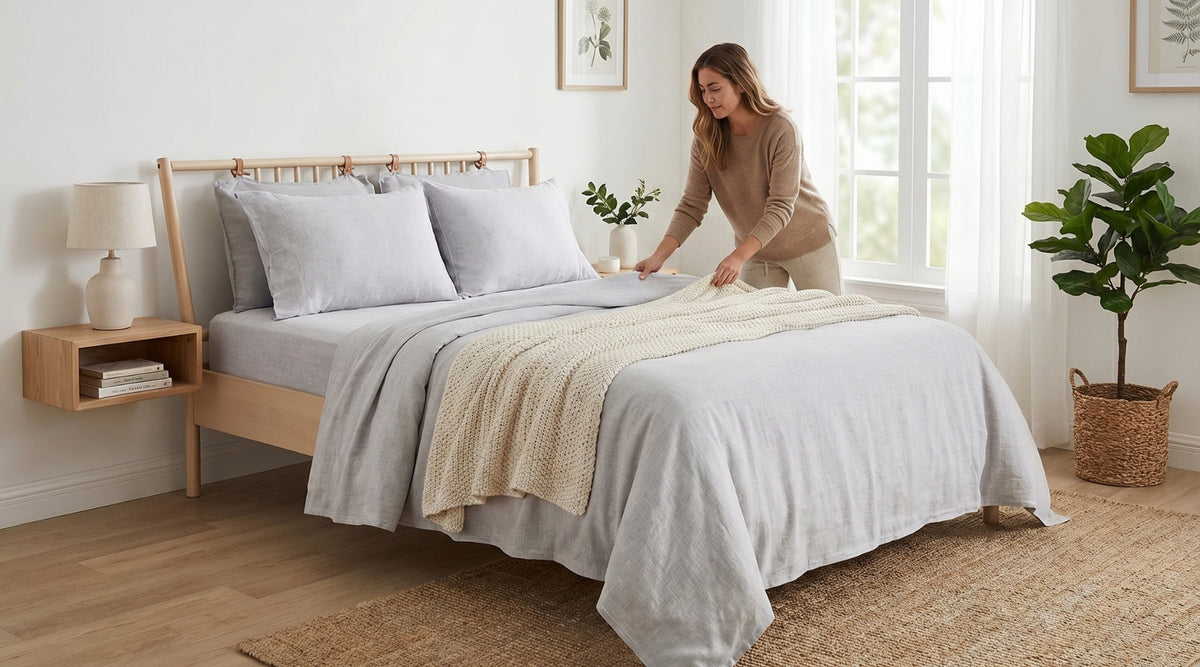
Less is more when it comes to bedroom design. See how to declutter your bedroom and decide what should stay and what should go.
Read more

Leave a comment
This site is protected by hCaptcha and the hCaptcha Privacy Policy and Terms of Service apply.