
Spring Food, Festivals, and Celebrations in Scandinavia
There's no better place than Scandinavia in the spring. See how communities come together to celebrate the longer, brighter days ahead.
Denmark: Snowdrops, Smørrebrød, and Samsø Potatoes
Snowdrops (vintergækker) are significant in Danish culture, as they’re said to be the first flowers of spring. One popular Danish spring tradition is that of the “gækkebrev,” or “snowdrop letter”, usually sent along with a bunch of snowdrops. Similar to how some children make paper snowflakes, the gækkebrev is made by cutting patterns out of a folded piece of paper, then opening it to reveal the beautiful symmetrical design. Inside is a short poem, often a riddle hinting at the identity of the sender. You’ll then send it anonymously, using only dots to indicate the length of your name. If the recipient guesses the sender correctly, the sender owes them an Easter egg; if not, the recipient owes the sender an Easter egg. Back in the 1800s, gækkebreve were even used for marriage proposals! Though obviously, the letters weren’t anonymous in this case…
Appropriately for the nation of hygge, Danes celebrate Easter Sunday with a big Easter lunch, or Påskefrokost. The påskefrokost centers around rye bread and particularly smørrebrød, open-faced rye-bread sandwiches with toppings such as roast beef, pickled herring, shrimp, and eggs. A special type of smørrebrød is known as stjerneskud (“shooting stars”), and stacks plaice fillet, shrimp, lettuce, and Limfjord caviar into a glorious heap of decadence. A popular pairing for smørrebrød is snaps, based on the popular Scandinavian botanical spirit, akvavit. You might also encounter Denmark’s national dish: stegt flæsk, or crispy pork with parsley and potatoes.

Speaking of potatoes: originating from the island of Samsø is a rather more unusual spring tradition. Samsø, renowned across the country for its high-quality food, harvests its sweet new potatoes in May, before any other part of the country. In fact, growers compete to be the first to harvest their potatoes. This first batch of potatoes has special status in Denmark, and can sell for DKK 1,500 ($231) per kilo! Samsø’s chefs, too, compete every year in the Samsøs bedste kartoffelmad, or "Samsø's Best Potato Sandwich". 2025’s winner was the restaurant of Det Lille Sommerhotel, who garnished their potato smørrebrød with black garlic aioli, pickled white and green asparagus, and onion rings.
(Note: after all that lovely Danish food, you’ll probably need a nap. Check out our full range of Danish-design bedding in The Modern Dane shop; it’s made from soft European linen and is perfect for a spring bedroom refresh.)
Sweden: Cows, Cakes, and Conflagrations
One of Scandinavia’s most endearing spring traditions is that of the Swedish kosläpp, which literally means “cow release”. Throughout April‒May, in accordance with animal welfare laws, cows are released back out onto the fields after a winter spent indoors. Excited, they frolic, roll around, and gambol over the grass. In recent years it’s become a family event: you can buy tickets to a kosläpp, where you may find other entertainment such as children’s games, refreshments, or talks about the animals. The Swedish phrase, “glad som en kalv på grönbete” (happy as a calf let out onto fresh pasture), likely originates from this tradition.

Walpurgis Night (Valborgsmässoafton) is celebrated around Northern and Central Europe on April 30, and marks the transition from spring to summer. It was originally a celebration of Saint Walpurga, a missionary who spread Christianity in Germany. Some of the biggest celebrations take place in Sweden, with bonfires throughout the country. For university students, who are also marking the end of the semester, this is one of the year’s biggest events. They start the day with strawberries and champagne for breakfast, and continue drinking and barbecuing in the park throughout the rest of the day.
Another tasty Swedish spring tradition is Våffeldagen or Waffle Day, celebrated on March 25. This holiday originates from a funny mispronunciation: March 25 was the day that, according to the Bible, God told Mary she would give birth to a son in nine months’ time. In Sweden, this was celebrated as “Our Lady Day”, or Vårfrudagen. Over time, “Vårfrudagen” became “Våffeldagen”, and that’s how Swedes ended up honoring Mother Mary with waffles. The traditional way to eat them is with jam and whipped cream, and perhaps a handful of summer berries if you’re feeling fancy.
Norway: Mountains, Metal, and Merriment
As you’d expect from the people who brought us friluftsliv (open-air living), Norwegians spend Påske (Easter) in the great outdoors. Everyone retreats to a hytte (cabin) in the mountains, where they’ll spend evenings reading crime novels or watching crime shows, a tradition so well established it has its own name, Påskekrim (“Easter crime”). For most people, this is their last chance to ski before next winter, and as anyone who watched the Winter Olympics will know, Norwegians are obsessed with winter sports! After a tiring day, they’ll refuel with oranges, sweet buns, and Kvikk Lunsj: the four-fingered chocolate wafer that’s a must for any Norwegian trip into the outdoors. If all that sounds like too much work and you’d rather enjoy the outdoors from the comfort of your bed, check out our Scandinavian-style bedding, printed with designs inspired by Scandi flora and fauna.

Oslo residents who don’t manage to escape to the mountains can enjoy another annual Easter event: the Inferno Metal Festival. Nordic countries dominate the world rankings for metal bands per capita; Norwegian and Swedish bands were central to the development of black metal and death metal, respectively.
This year’s Inferno will be headlined by legendary Scandi rockers Cult of Luna and Mayhem, among others. Outside of the festival, you’ll find related events such as a tattoo fair, a guitar clinic with top musicians, and a Black Metal Bus Sightseeing Tour. There’s also a guided Edvard Munch tour—as the creator of “The Scream,” we think Munch would have approved.
May 17 is Norway’s Constitution Day, which celebrates the 1814 signing of the constitution declaring Norway’s independence from Denmark. Ironically, Norway then formed a union with Sweden until 1905, though they kept their independent parliament, flag, legal system, and currency.
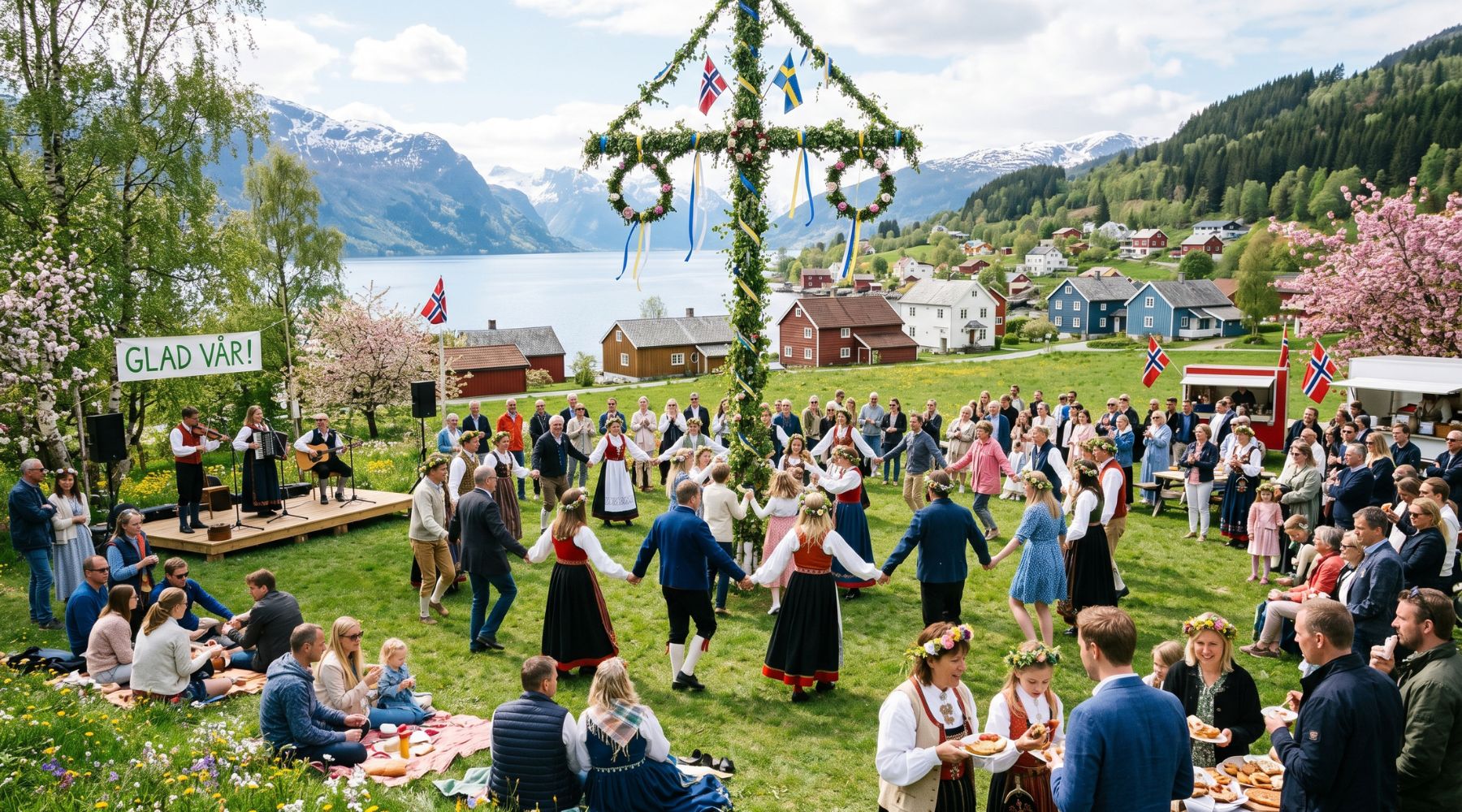
The day begins with a social breakfast, often with eggs, smoked salmon, and champagne. The biggest event of the day is the parade in Oslo, complete with marching bands and people dressed in the bunad, the national costume of Norway. Afterward, people have picnics along the river.
How do you celebrate spring? Does your culture have any unusual spring traditions? Let us know on Instagram, Pinterest, Facebook or Twitter!
En savoir plus

Linen is a wrinkled, scratchy fabric only for summer. True? False! We set the record straight, busting 7 common myths about linen bedding.
En savoir plus
Scandinavian Bedroom Design Inspired by Nordic Forests
Let Nordic forests guide your bedroom design. See how to bring the outdoors in, integrating earthy colors and natural elements found across Scandinavia.
En savoir plus

Laisser un commentaire
Ce site est protégé par hCaptcha, et la Politique de confidentialité et les Conditions de service de hCaptcha s’appliquent.